
From Field to Studio; the journey of a painting.
The work usually starts before the painting does.
During my time at The Corridor Project (October 2025) I returned to the same stretch of land over time. That repetition mattered. It allowed me to register change including subtle shifts in light, weather, vegetation, texture, colour. I’m not looking for a single moment, but for duration. For what accumulates.
En plein air painting places me directly inside those conditions. Time is not abstract out there. It’s felt physically. Heat closes in. Cold stiffens the hands. Wind pushes against the body and surface. Ants crawl across the ground, into the paint and up my pants!. Snakes move through the grass. There’s no neutral position; you are part of the environment you’re trying to understand. This is what excites me and charges me.
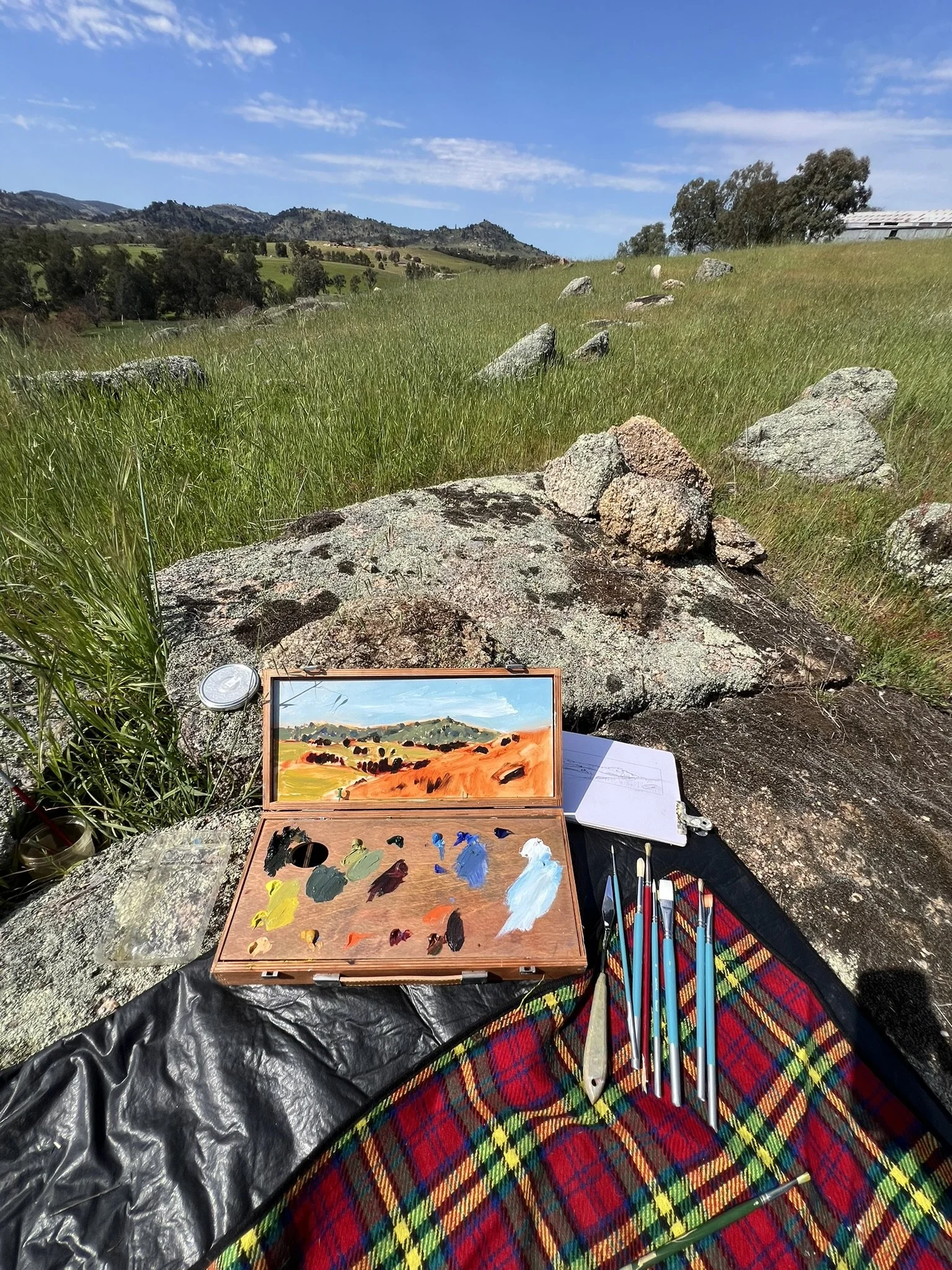
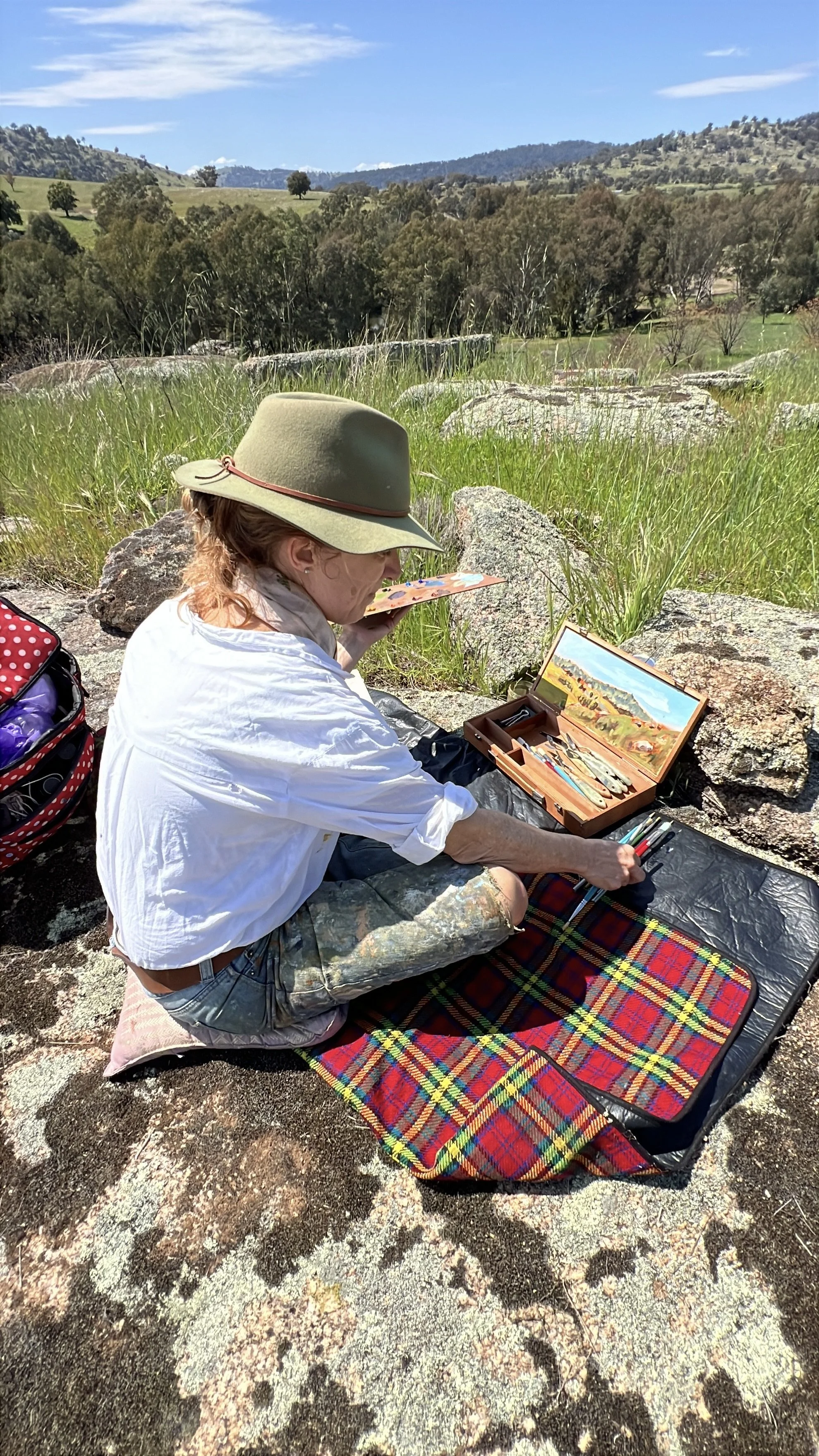
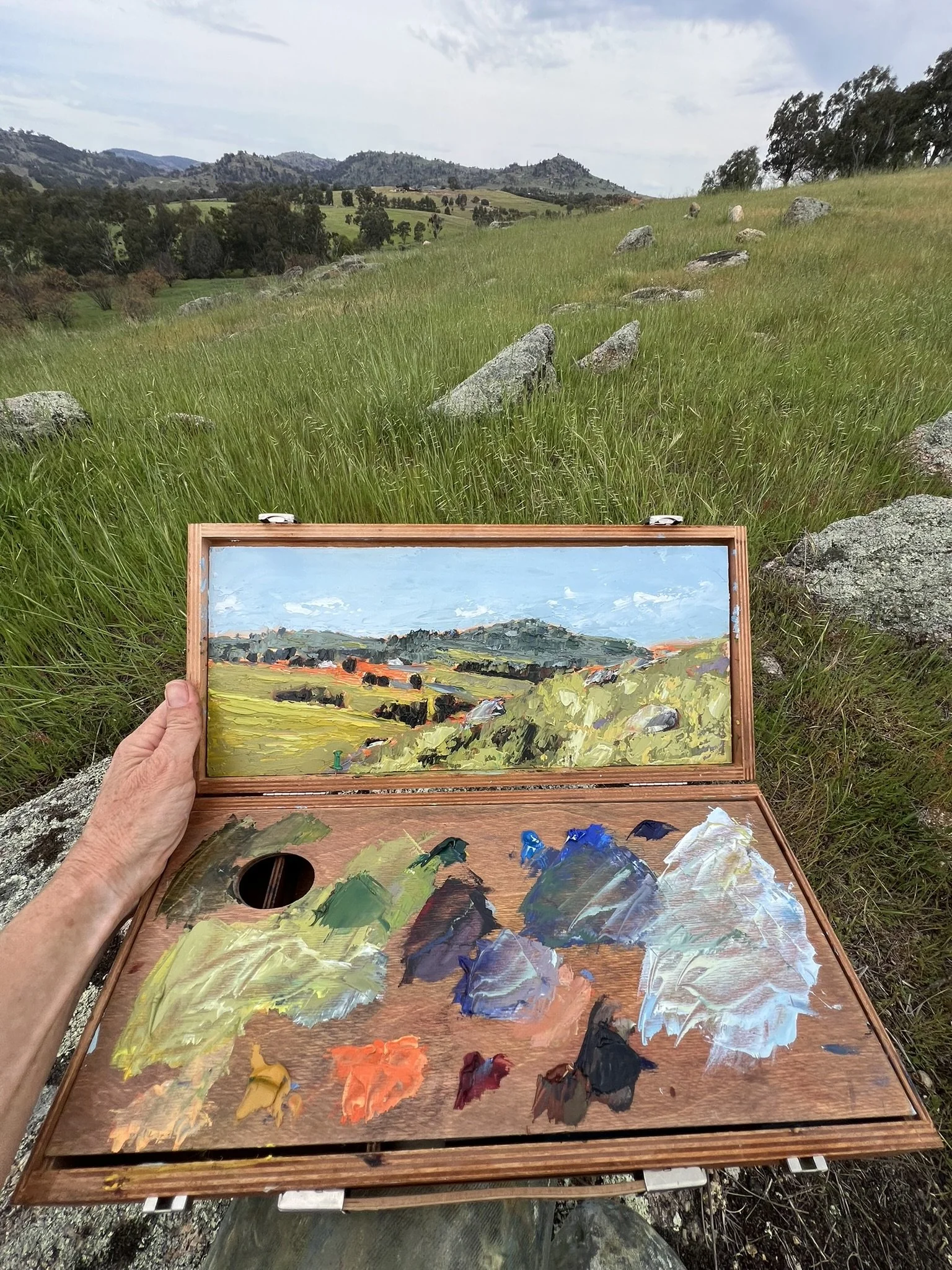
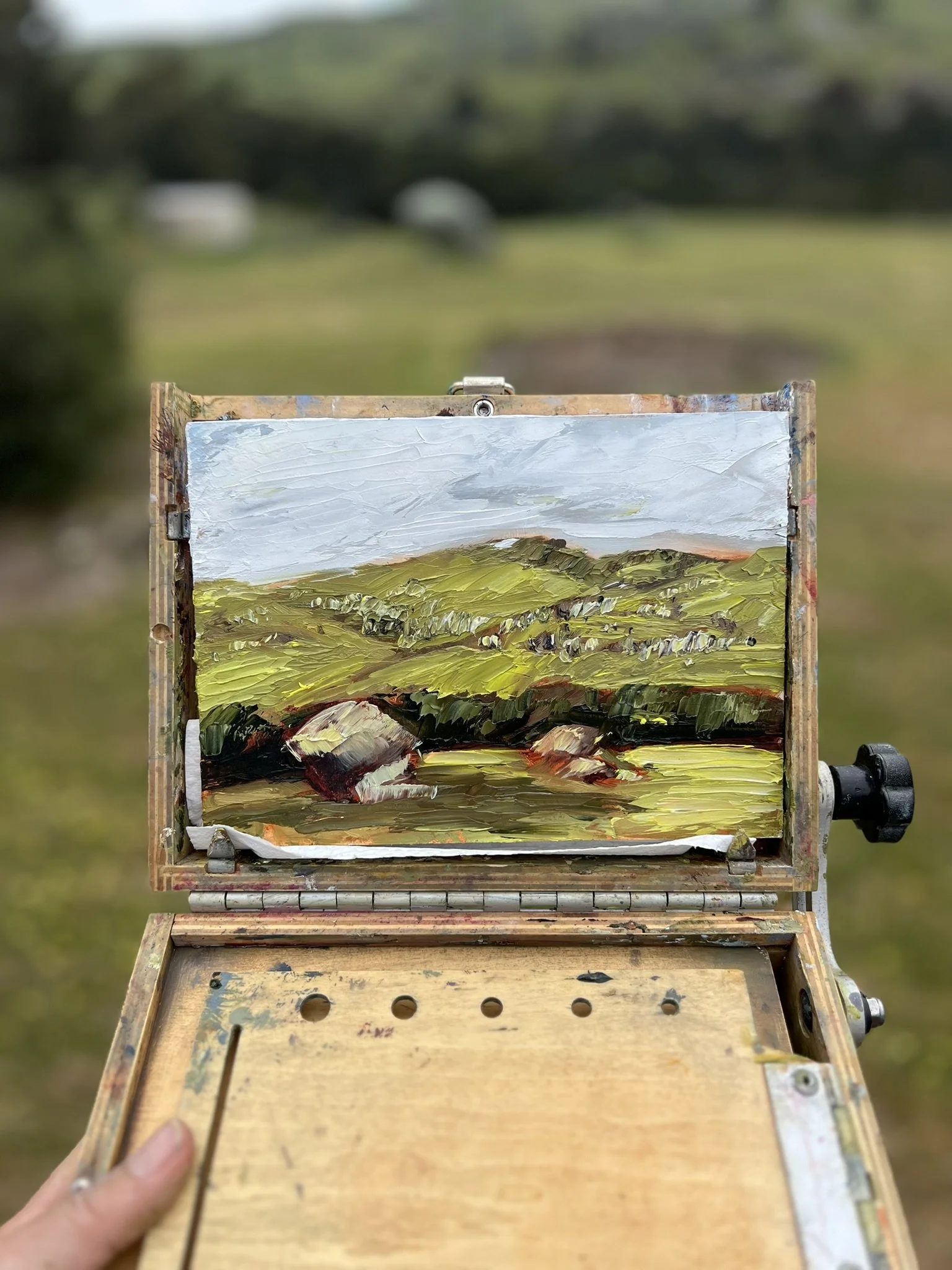
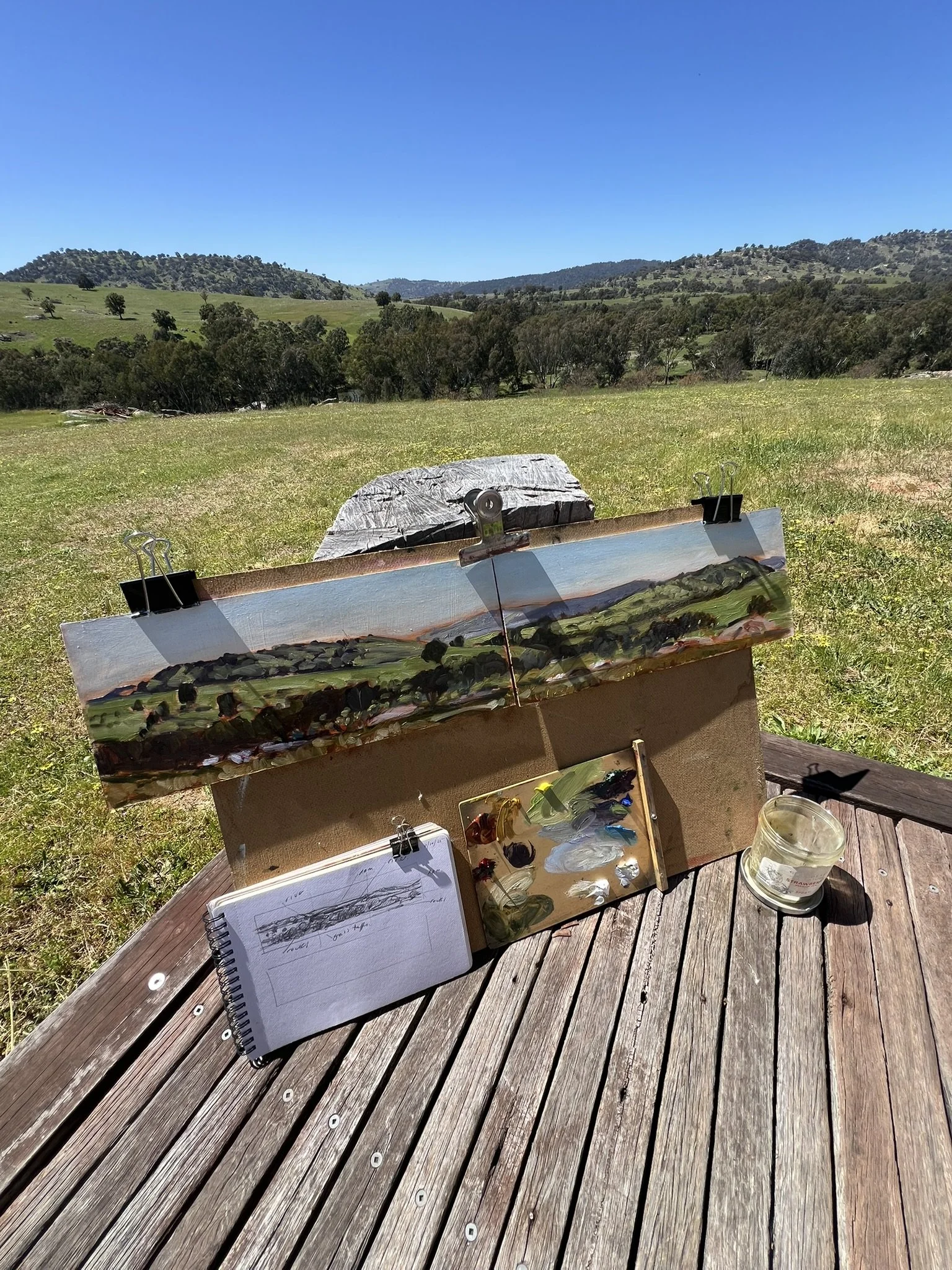
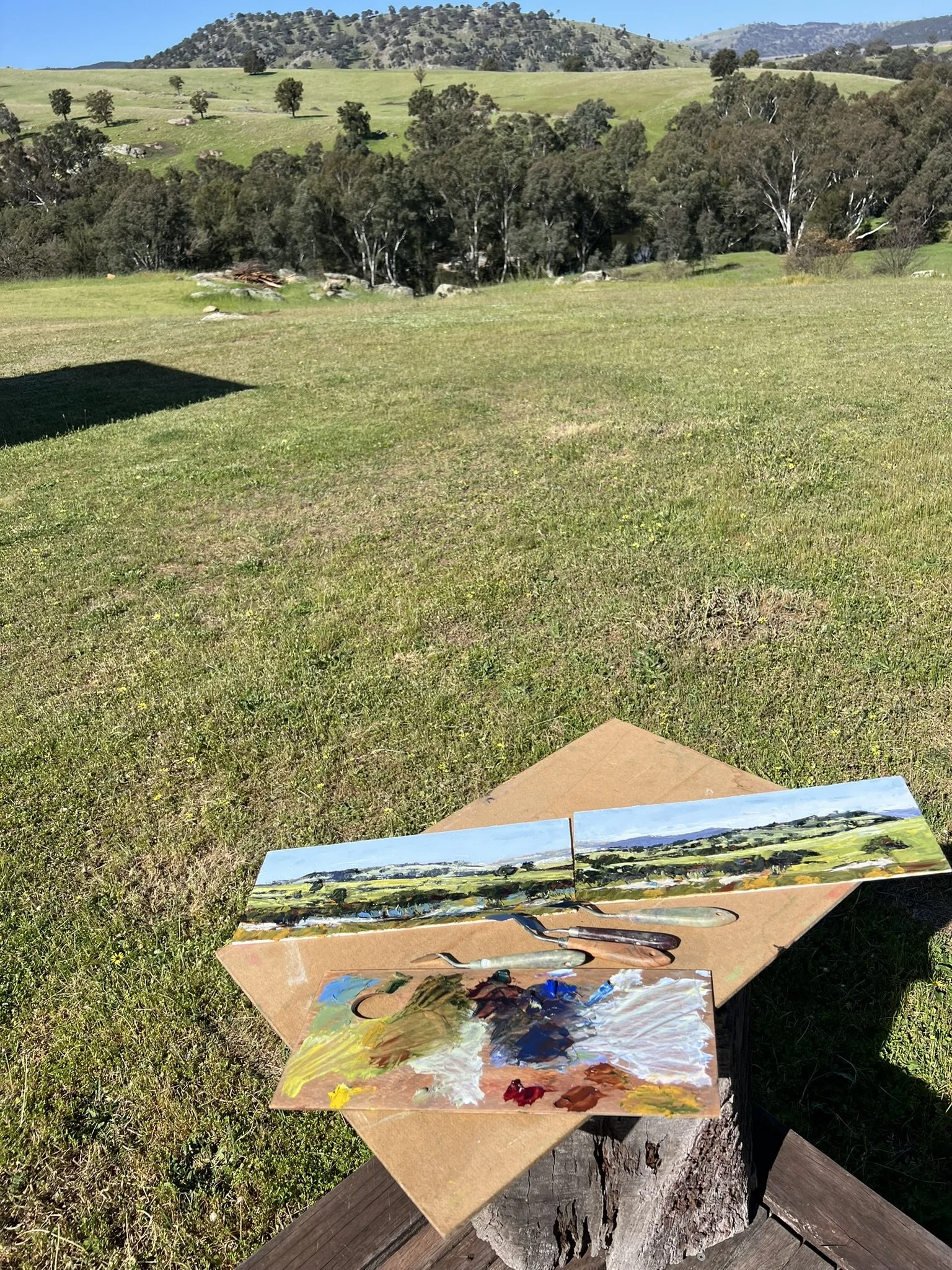
Weather dictates everything. Light changes faster than expected. A calm morning can turn harsh. Sometimes it’s uncomfortable and often genuinely demanding. And yet there’s something essential, almost a necessary thing about responding to all of that with paint. The body is alert. Decisions are immediate. You’re working with what’s happening, not what you wish was happening. Most importantly there is no over thinking. It’s all about being present.
I often ponder about Turner strapping himself to the mast of a ship to experience the full force of a storm. Not as spectacle, but as commitment. A belief that to understand something, you have to meet it fully. That kind of authenticity matters to me. Being there matters.
When I’m painting on site, I’m not trying to make a finished work. I’m observing. Recording colour relationships, scale, weight, space and place. I’m paying attention to what persists and what keeps shifting. Much of that information stays within me rather than the image.
The paint is applied directly and with urgency. There’s no opportunity to correct or refine. Marks are made in response to time passing, not despite it. These field works function as records and evidence of presence, of attention, of a specific set of conditions.
The studio on the other hand introduces distance.
Back inside, memory replaces immediacy. I’m no longer responding to the landscape in front of me, but to what has remained after repeated encounters. Memory edits. It strips away detail and retains pressure points. The studio work becomes a way of consolidating time and compressing multiple moments into a single surface.
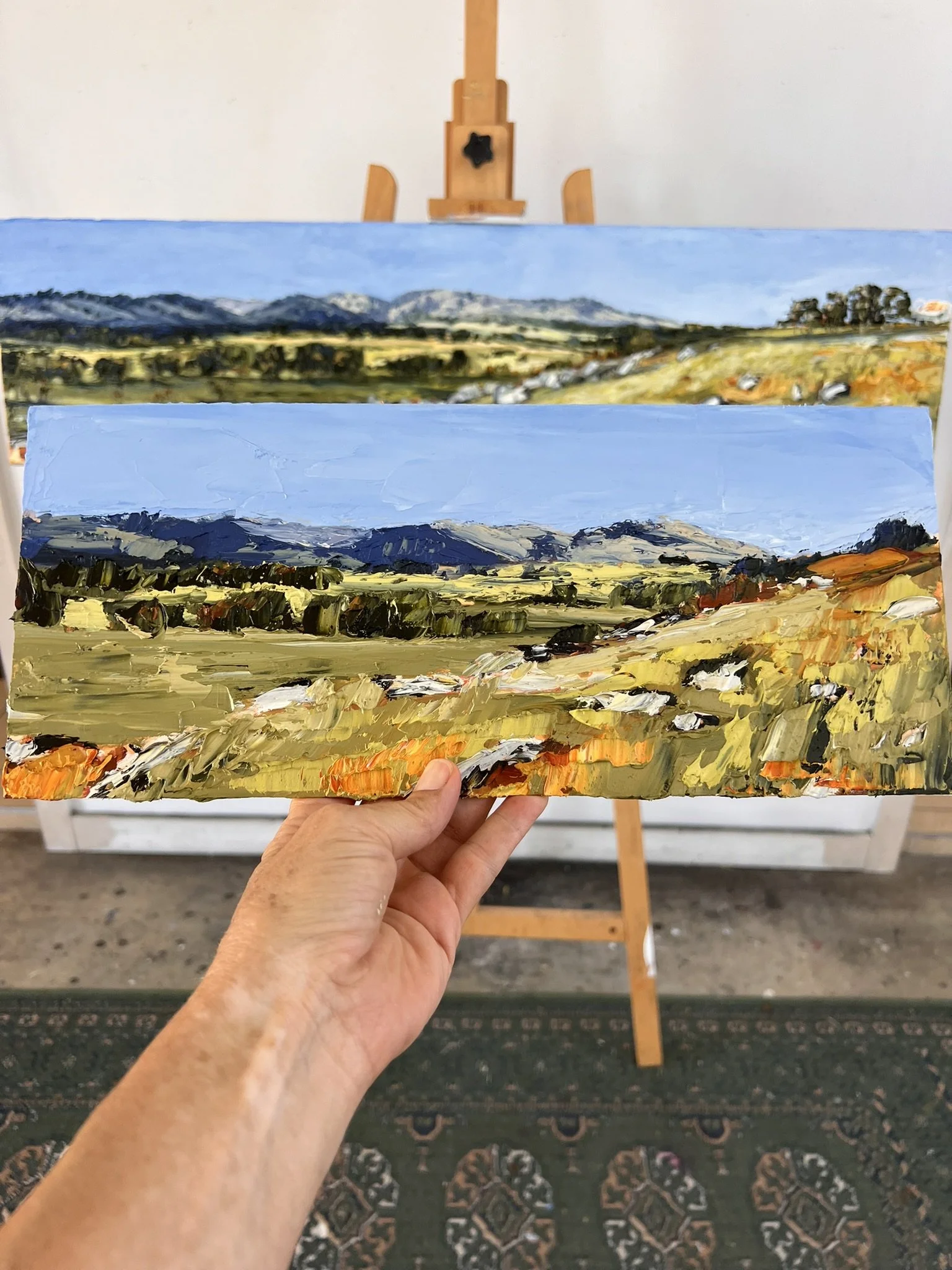
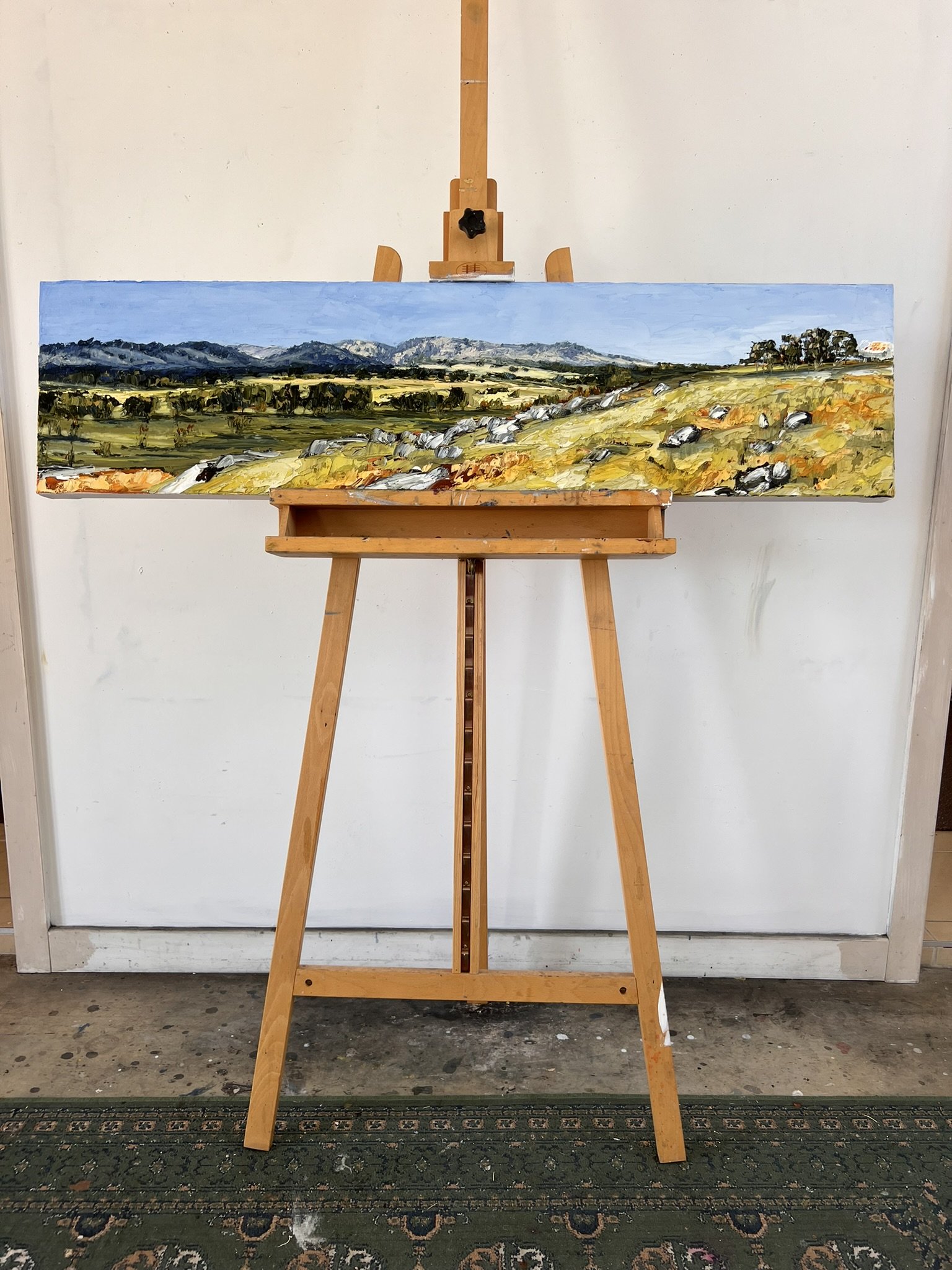
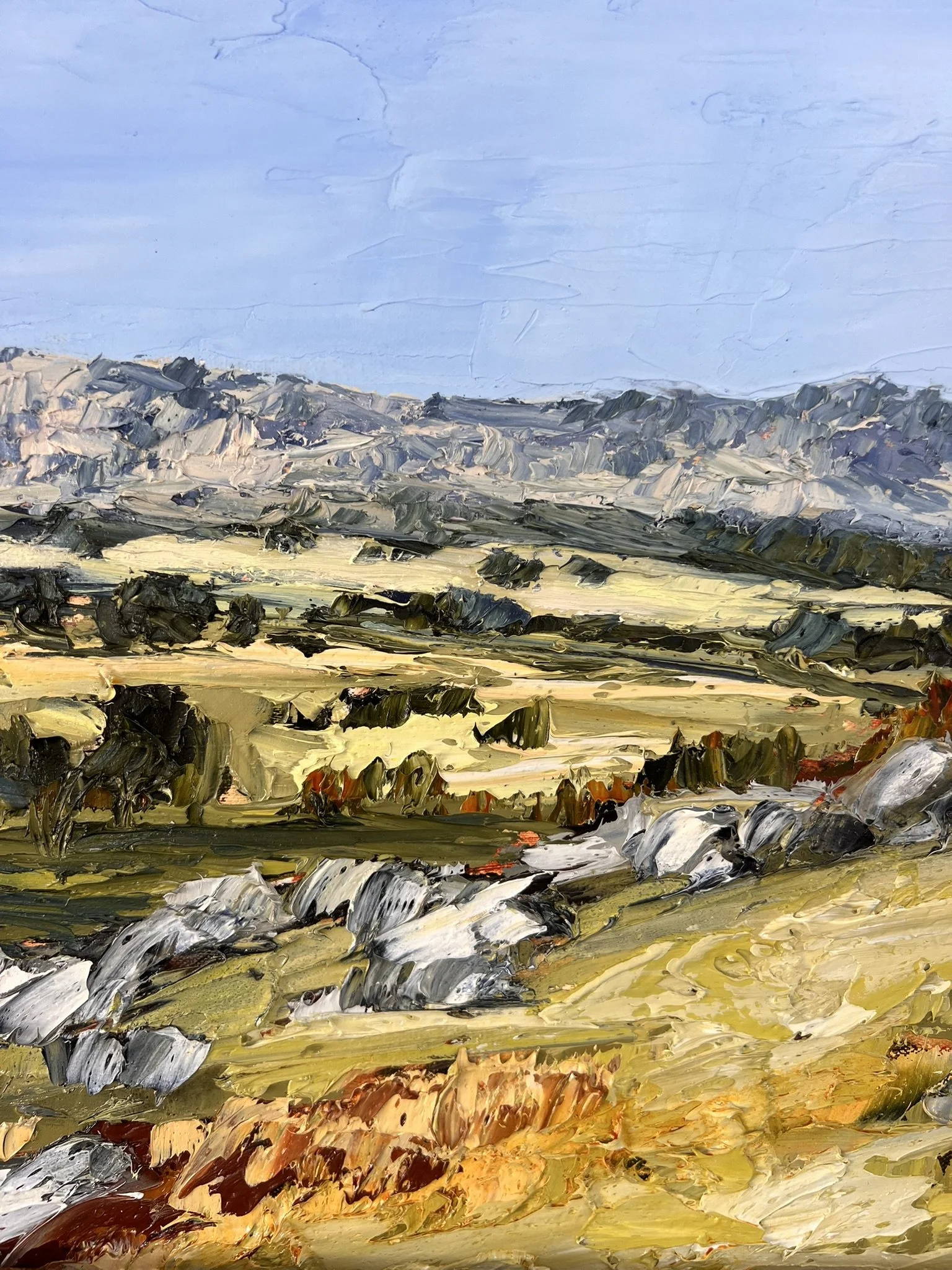
This is where the work shifts from recording to reflection. Forms simplify. Space stretches. The paintings are not depictions of a view, but constructions shaped by accumulated observation. They’re built slowly, with the awareness that what appears stable is often provisional.
The Corridor is not a static landscape. It carries traces of human presence like the woolshed, cleared ground, paths worn in by use situated alongside ongoing environmental change. These elements operate as quiet markers of humanity over time. They sit within a broader landscape shaped by climate, pressure, and development.
The paintings hold that tension. They act as witnesses rather than statements. I’m interested in how land holds memory, and how painting can function as a record of looking. Of returning, noticing, and staying with change rather than illustrating it.
In the studio, surfaces are worked and reworked. Some marks remain raw, others are layered over time. I want the paintings to retain evidence of their making, not as gesture, but as duration. Time is embedded in the surface.
The final works sit between field and studio, between exposure and distance. They are shaped by weather, by bodily presence, and by reflection. Together, the two processes allow me to document change while acknowledging uncertainty.
Painting, for me, is a way of holding time; of bearing witness. I look forward to returning to The Corridor Project again in May this year. I wonder what the landscape will reveal to me then.
Yours in art,
Rebecca
