
Where did all the good Ism’s go?
The end of History: art school is dead, and apparently it’s over for art Isms.
These have been the exciting subjects of the first few weeks of my new Master of Arts (Fine Arts) subject. Not exactly the most uplifting introduction to postgraduate study. What a sobering thought - no history, no art school, no more isms.
What has the world come to? How did we get to this point?
Academic Terry Smith calls it Contemporaneity and the end of Isms as we know it. We are in an age of plurality, with many conceptual themes concurrent in contemporary art. Globalisation, multiple cultures existing simultaneously, rapid communication, changing ideas of place and identity, political uncertainty, technology, migration and different experiences of time.
Apparently, Modernism, and consequently Postmodernism, are partly to blame. Modernism brought to light objectivism, where what we saw or what we most importantly said was true, fact. An apple was an apple, and that was it. Yet postmodernist thought said the apple was bound in a social construct, and depending on your culture, life experiences, etc., the apple could mean many things. It could mean breakfast, school lunches, Summer. Our interpretation or meaning of the apple is subjective. I think you get where I’m going here.
The postmodernist man was the fun police and deconstructed everything to a point where we have no joy anymore.
These days, it seems we can’t just make “art for art’s sake” without explaining ourselves, if we want to be taken seriously in the art world. American art critic Clement Greenberg didn’t coin the phrase, but his belief that art could stand on its own fits with this idea. He argued that painting could be about painting itself, its colour, surface, paint and composition, without needing to represent or explain anything beyond the work.
I’m not saying art shouldn’t be conceptual. I love ideas. I love thinking about why I’m making something and what it might mean. But sometimes I wonder if we have reached a point where the concept has become more important than the art itself. Where a painting simply being a painting, beautifully made and genuinely felt, isn’t quite enough.
Maybe this is what I’m struggling with. Not the ideas themselves, but the feeling that everything needs to be deconstructed, theorised and justified before it can be considered worthwhile.
I’m beginning to think there should be room for both.
Before the Impressionists, academic elites certainly dictated and evaluated art. The Paris Salon and the Académie had enormous influence over what was exhibited and what was considered good art. But artists weren't constantly worrying about which art movement they belonged to or how to document themselves in art history. They made art, responded to the world around them, and often fought with the establishment about what art should be.
Now we spend an awful lot of time explaining where our art sits within the history of art.
Have we reached a point where academics, institutions, and galleries have ruined it for us?
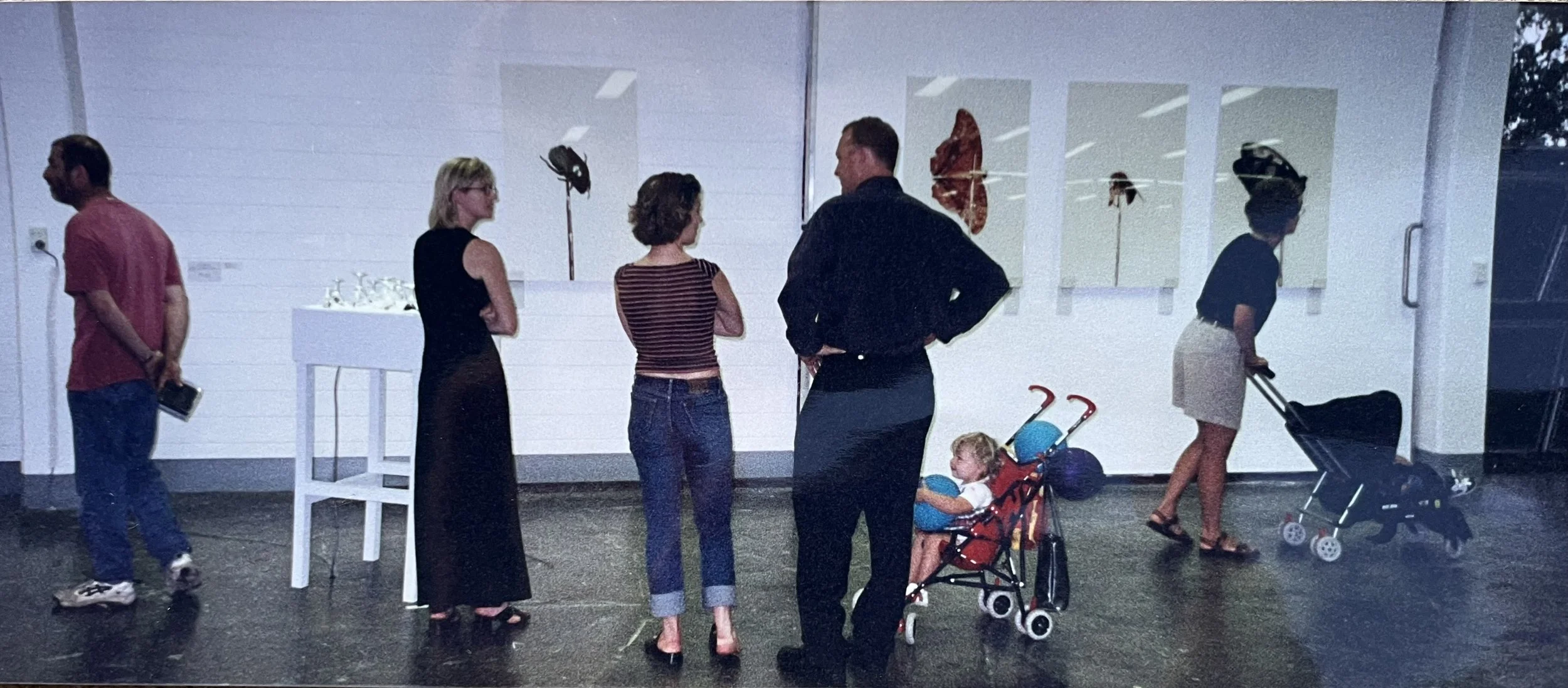
College of Fine Art student exhibition 1999, Univeristy of NSW
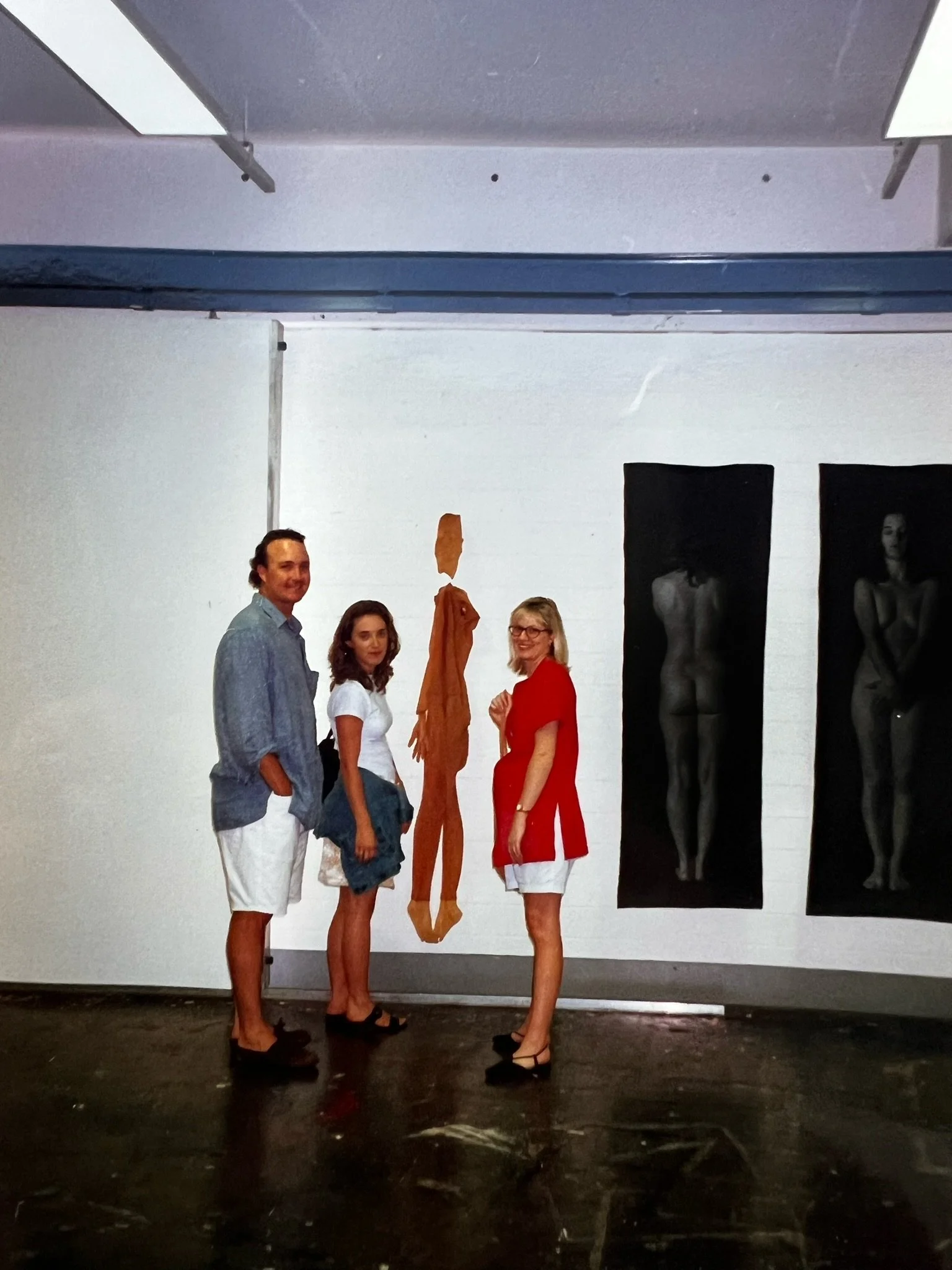
1998 College of Fine Art student exhibition, University of New South Wales
We see it in universities that no longer have art programs. I realise now that I was privileged in the 90s. I went to TAFE and completed an Associate Diploma in Art, which gave me a wonderful foundation in drawing, painting, sculpture and photography. Then I attended COFA at UNSW for four years, completing a BFA Hons, and artist Rosemary Laing supervised my honours year. Six wonderful years studying art, both skill and history based. I feel sorry for students coming through now. Where can they study art? Sure, we can blame universities; we can blame the government, because it's easy to blame someone else, but where is our control over art education?
So here we are: no art education, no art ism and if we believe Francis Fukuyama, no history. In The End of History? (1989), he did argue that history had a direction. He did not mean that events would stop happening, but that the great ideological struggle over how human society should be politically organised may have reached its endpoint. Basically, he was saying that because the world was heading toward a democratic society, history would be over. Crazy! There are more autocratic countries in the world today than in 1989!
Do we see a thread here? I see postmodernist philosophers destroying art and the beauty of history, then trying to make something out of nothing and deconstructing every ounce of humanity and reducing it to mere existence.
Now is the time to bring life back from the Postmodernist ashes and have a renaissance of art. Bring back basic skills like draftsmanship, painting, and sculpture, and appreciate an object of beauty expertly crafted by human hands.
We are at the precipice of AI and artificial life; could this be a rebirth of fine arts?
I haven’t lost hope, yet!
Yours in art,
Rebecca
Extra reading:
Terry Smith, What Is Contemporary Art? , University of Chicago Press, 2009
Francis Fukuyama, “The End of History?”, The National Interest, No. 16, 1989
